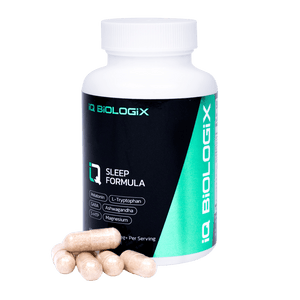







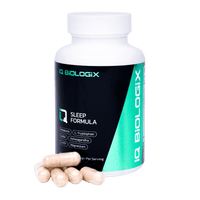


























































































































































Sleep Formula
Sleep Support
Sleep Formula doesn’t just supplement melatonin – it addresses three separate systems behind sleep: the timing signal (10mg melatonin), the excitability quieter (GABA, L-theanine, valerian, passionflower, chamomile), and the serotonin-to-melatonin pipeline (L-tryptophan, 5-HTP). Eighteen ingredients, layered intentionally. If you take any prescription medication, check the Safety Information section before starting.
Most sleep supplements do one thing – usually melatonin alone, sometimes magnesium. This formula takes the position that sleep failure usually isn’t a single-system problem, so the solution shouldn’t be either.
The timing signal.
Melatonin (10mg) is the brain’s natural darkness signal – the hormone the pineal gland releases to tell your body it’s time to sleep. Most over-the-counter melatonin runs 0.5–3mg; this formula uses 10mg, the dose used in clinical sleep research. Higher doses aren’t always better for maintenance, but they’re more effective for onset – getting you to sleep, not just keeping you there.
The calming layer.
GABA is the brain’s primary braking neurotransmitter – it reduces the excitatory firing that keeps you mentally activated when you’re trying to wind down. L-theanine supports alpha-wave activity, the relaxed-alert state that precedes sleep. Valerian, passionflower, chamomile, lemon balm, and hops contribute the herbal side of the same mechanism – centuries of traditional use for nervous system calming, with supporting modern research.
The upstream pipeline.
Your brain makes melatonin from serotonin, and serotonin from L-tryptophan. This formula includes both L-tryptophan and 5-HTP – 5-HTP enters the serotonin synthesis pathway one step ahead of tryptophan, so both precursors are covered. More serotonin substrate means more raw material for melatonin production as your sleep cycle unfolds through the night.
St. John’s Wort in this formula has meaningful interactions with prescription medications. See the Safety Information section before use if you take anything regularly.
Things to know before taking
Frequently Bought with Sleep Formula




18 actives. 7 jobs.
Click to expand
01
Sleep Architecture
Magnesium
+
−
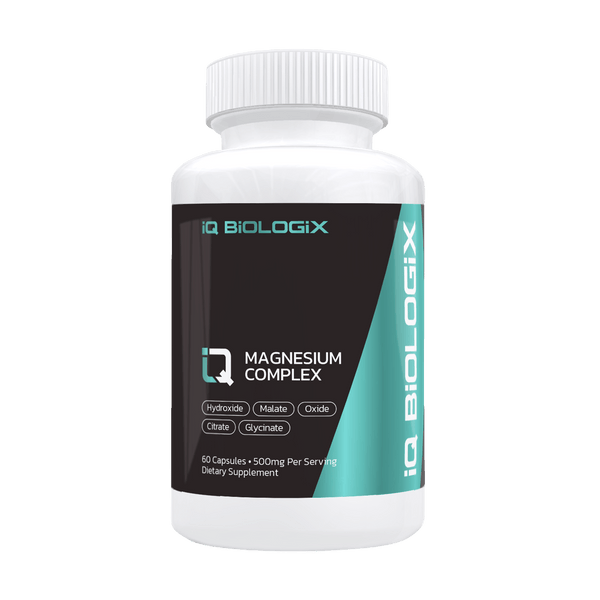
Magnesium calms the calcium channels and NMDA receptors – the brain's main excitatory switches – that keep the nervous system activated during sleep. Deficiency is one of the most common reasons people wake mid-night. Magnesium citrate absorbs efficiently and is easy on the stomach.
02
Sleep Cycle Regulation
Melatonin
+
−
Melatonin is the brain's natural sleep-onset signal, released by the pineal gland when it gets dark. At 10mg – above the 0.5–3mg range most research uses – this formula takes a high-dose approach for a stronger, faster signal. Expect intensified REM sleep and vivid dreams at first.
03
Serotonin Modulation
St. John's Wort
+
−
St. John's Wort slows the breakdown of serotonin, dopamine, and norepinephrine – keeping more of each active at the synapse. It also significantly speeds up how the liver metabolizes many prescription medications. Drug interaction information is in the Safety Information section.
04
Calming Support
L-Theanine
+
−
L-Theanine promotes the alpha brain-wave state – relaxed alertness without sedation. It eases the cognitive wind-down from the day's stimulus load, smoothing the transition to sleep-ready. Works alongside GABA's calming signal without adding a drugged or heavy feeling.
05
Stress Response
Ashwagandha
+
−
Ashwagandha root modulates the HPA axis – the brain-to-adrenal pathway that controls cortisol output. Elevated cortisol is one of the main drivers of poor sleep onset and shallow overnight sleep. The withanolide compounds in the root fraction produce these cortisol-reducing, adaptogenic effects.
06
Serotonin Synthesis
5-HTP
+
−
5-HTP skips the conversion step your body normally uses to turn tryptophan into serotonin – it enters the pathway one step ahead. Serotonin is the raw material for melatonin synthesis, so 5-HTP supports both mood and sleep architecture. Source: Griffonia simplicifolia seed.
07
Neural Inhibition
Gamma-Aminobutyric Acid (GABA)
+
−
GABA is the brain's primary inhibitory neurotransmitter – it slows down neuronal excitability throughout the central nervous system. Supplemental GABA has limited direct brain penetration at standard doses, but peripheral GABA receptor activity and consistent user reporting support sleep-onset improvements.